Entropion and ectropion almost always come down to how the eyelid is built, not to anything you did or missed. Entropion turns the edge inward so lashes and fur scrape across the surface of the eye, while ectropion does the opposite, drooping away and leaving the inner rim exposed. It can also develop later, when tissue slackens with age, scarring from an old injury pulls the lid out of position, or a separate painful eye problem makes a pet squint hard enough to curl the margin in. The cause matters because it decides the fix: a lid that grew this way needs surgical correction, usually one procedure with lasting comfort afterward, while a roll driven by pain can ease once the sore spot underneath is treated.
Carolina-Virginia Animal Hospital has looked after pets in Providence for more than forty years, and a weepy, half-closed eye is something we would rather see sooner than later. An exam here checks the lid margins, the tear film, and the cornea, so you leave with a real cause rather than a guess, and because the risk often runs in the breed, we start watching for it at puppy and kitten wellness visits. When the lids do need correcting, we will be straight with you about what the surgical repair involves and how it would be planned for your pet. If your pet is squinting, tearing, or pawing at an eye, bring them in for a look before the cornea gets damaged.
If Your Pet Is Squinting, Here's What Matters Most
- Squinting, tearing, and pawing at an eye are signs of pain, and they need an exam that same day, before the cornea takes damage.
- Entropion rolls the lid inward so hair rubs the eye, while ectropion droops it outward and leaves the inner rim exposed to dust and debris.
- Both conditions are correctable, and the goal of surgery is a measured change in lid position rather than a dramatic one.
- Most pets are far more comfortable within days of a repair, and the collar and eye medications at home are what protect that result.
Is It Entropion or Ectropion, and Why Does the Difference Matter?
The two roll in opposite directions, and that decides both the damage and the repair. What the friction does over time depends on which way the lid sits:
- Entropion: Entropion turns the margin inward so lashes and fur sweep the cornea with every blink, dragging across the eye and wearing away its protective surface. The corneal ulcers that follow can deepen within days when the friction never stops. Scar tissue left behind may cloud vision for good.
- Ectropion: Ectropion sags the lid away from the eye and leaves the pink inner tissue exposed to dust, wind, and everything else the air carries. Thick or persistent eye discharge usually means the tear film isn't draining the way it should or the surface is already inflamed, both common when a loose lower lid holds debris against the eye. Repeat conjunctivitis tends to follow.
| Entropion | Ectropion | |
| Lid position | Curled in against the globe | Sagging out, away from the globe |
| What you notice | Squinting, tearing, a half-closed eye | A droopy red rim and debris caught in the pocket |
| Main risk | Ulcers and corneal scarring | Ongoing irritation and repeat infections |
| Usual repair | Removing a measured crescent of skin | Shortening and tightening the lid |
What Does an Eyelid Problem Look Like at Home?
A weepy, half-shut eye is usually the first thing a family notices. Squinting, pawing at the face, light sensitivity, and a pet who suddenly prefers the darker room are all signs of eye pain, not cosmetic quirks to watch and wait on.
Early on, the trouble comes and goes. A margin that curls only when the eye is irritated can look fine on a quiet morning, then clamp tight after a dusty walk or a nap in the sun. If one side looks different from the other, trust that.
Timing changes the repair. A young dog with a mild inward roll may need one small correction, while that same dog a year later can arrive with a scarred cornea and a harder job ahead. If your pet is holding an eye shut, call us that same day instead of waiting to see whether it settles overnight. And please skip human eye drops or a leftover ointment from an old problem: steroid-containing medication can turn a small scratch into a deep one.
Which Dogs and Cats Are Most Likely to Have Eyelid Trouble?
Most eyelid disorders trace back to the face a pet was born with, since heavy skin folds, deep-set eyes, and short muzzles all change how the lid margin sits against the cornea.
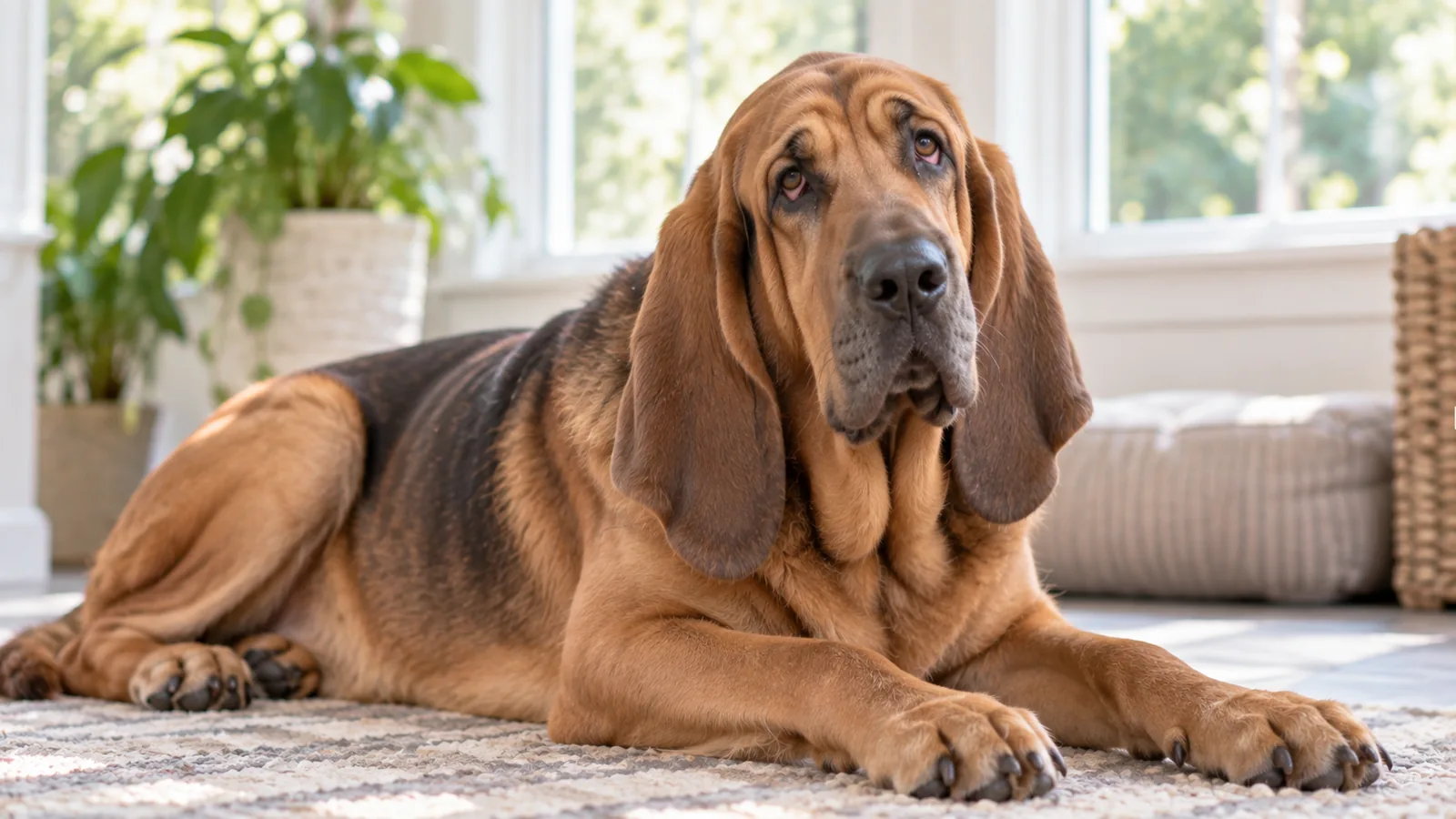
- Loose-skinned and flat-faced dogs: Shar-Peis, Chow Chows, English Bulldogs, Pugs, Rottweilers, Bloodhounds, and Great Danes carry the architecture that curls a lid inward. Because hereditary eyelid conditions follow family lines, a puppy out of affected parents deserves a careful look at the lids during those first visits.
- Cats: Persians, Himalayans, and other flat-faced breeds carry the same shortened facial structure that tugs the lower lids inward. Entropion is never a dog-only problem.
- Droopy-lidded breeds: Bassets, Saint Bernards, and Cocker Spaniels were bred for a slack lower rim, which is ectropion in mild form. Some dogs have both at once: the outer corner sags while the inner corner rolls in.
- Causes that aren't breed: Tissue slackens with age, scarring from an old injury pulls a margin out of place, chronic inflammation thickens the skin, and real pain makes a pet squint hard enough to curl the lid on their own. Rapid weight loss thins the fat cushion behind the globe and can do it too.
Since the risk so often travels with the breed, lid position is worth checking at wellness visits while your pet is still comfortable. A slight roll caught early is a much simpler conversation.
How Do We Tell a Structural Problem From a Painful One?
One drop of topical anesthetic answers most of that in the exam room. A short set of ocular tests, including tear production measurement, fluorescein staining, and pressure readings, separates a structural lid problem from an infection or a surface scratch that looks much the same from the outside.
- Look before touching: The eye gets watched at rest first, because handling a sore face changes how the margin sits within seconds.
- The numbing test: Once the anesthetic takes hold, a pain-driven curl relaxes into a normal position and a built-in one doesn't. That step alone decides whether surgery is the answer or whether treating the sore spot underneath will do it.
- A close look at the hairs: Extra lashes along the rim, or a single hair coming through the inner surface, cause an identical squint with no malposition at all.
- Both eyes, every time: The quiet eye gets examined too, since these conditions are frequently symmetrical.
Plenty of eye trouble looks identical from the couch. A scratch, a blocked tear duct, dry eye, and a rolled margin can all produce the same weepy squint, and more than one can be true at once. An eye exam separates lid position, tear production, and corneal health into distinct answers, which keeps treatment from chasing the wrong thing.
What Can Be Done About a Lid That Sits Wrong?
Options run from a few temporary sutures to permanent correction, and the choice depends on age, cause, and how much the cornea has already taken. Some pets do well with lubrication and time while a young face finishes changing; others need the margin rebuilt to hold its position for life. If you show or breed your dog, breed registries set their own rules about surgically corrected dogs, so check your registry's policy before anything is scheduled.
Can a Puppy Be Treated Before They Finish Growing?
Young pets often need a bridge rather than a permanent fix. Temporary eyelid tacking uses a few small sutures to roll the lid back into a normal position for several weeks, which buys a growing puppy time without committing to permanent surgery. Those stitches sit in the skin below the rim, never in the eye itself.
Tacking can be repeated if the curl returns, and plenty of young dogs outgrow the problem once their head shape settles. If it hasn't resolved by the time growth finishes, definitive correction gets planned with the adult anatomy in full view. Frequent rechecks at that age fold neatly into our Care Plans, which keep eyes on the calendar alongside vaccines and growth checks.
What Does Permanent Eyelid Repair Involve?
Permanent eyelid surgery removes a measured crescent of skin near the lid margin, and taking too much is exactly how one problem turns into the opposite one. A conservative correction is the goal: slightly under is adjustable later, while overcorrection creates a new exposure problem that's harder to undo.
Technique depends on species, direction of the malposition, and the individual face in front of us. Ectropion repair usually shortens and tightens the rim rather than trimming above it, and a severe case in a heavy-faced dog may call for a combination. Anesthesia is built around your pet's age, weight, and health instead of a single protocol, and lid repair is among the surgeries we plan and schedule here. For the most complicated cases, we'll say plainly whether it's a repair we do, one we arrange with the traveling surgeon who operates with us, or if referral to an ophthalmologist is needed.
How Is Entropion Different in Cats?
Entropion in cats usually shows up later in life and often travels alongside chronic surface disease, so the repair plan tends to combine techniques rather than rely on a single one. A senior cat with years of herpesvirus-related irritation may need that inflammation controlled both before and after correction. Feline lids are smaller and thinner, with far less skin to spare. That margin gets handled delicately.
What Happens on the Day of Surgery?
Surgery day opens with a fresh look at the lid, since the plan depends on how the eye sits that morning rather than how it looked at the consult. Pain medication starts before the first incision, anesthesia is tailored to your pet, and someone watches vital signs from induction through waking.
- Before anesthesia: A physical exam and blood work confirm the plan, and every drug dose is calculated to weight.
- Marking the skin: The area to be removed is marked with your pet positioned naturally, because a rim pulled tight under drapes won't sit the way it will at home.
- Monitoring: Heart rate, oxygen, and temperature are tracked continuously.
- Comfort: Multimodal pain control during the procedure, plus medication to go home with.
- Waking up: Most pets rest in a quiet recovery space with the collar already on, and they head home once they're alert, warm, and steady.
How Long Does Recovery Take After Eyelid Surgery?
Most pets look more comfortable within two or three days, though the margin keeps settling for several weeks. Sutures generally come out somewhere around ten to fourteen days, and the protective collar stays on until then. Puffiness and faint bruising early on are part of healing, not a setback.
What's Normal in the First Few Days, and What Isn't?
Normal looks a little rough: swollen lids, a small amount of clear or pink-tinged discharge, and a sleepy pet that first evening. Anything that worsens after day two deserves a phone call.
Call us if you see:
- Thick yellow or green discharge
- A cloudy, blue, or dull patch on the surface of the eye
- Swelling that increases instead of fading
- A stitch that has come loose, or an incision pulling apart
- Hard squinting that returns after it had eased
- A pet who won't eat or seems painful despite medication
The e-collar, or cone, isn't optional. One solid rub against the carpet can pull a suture line open, and then the whole repair starts over on tissue already trying to heal. Keep it on full time, naps included, until the stitches are out.
Some pets go home with eye drops or ointments. Administering eye medications goes far easier when you steady the head from above, brace your hand against the skull, and let the drop fall from a short distance instead of touching the eye. With more than one prescription, space them a few minutes apart and save ointments for last.
What Do the Rechecks Look For?
Follow-up visits track two things: how the incision is knitting and where the lid finally comes to rest.
| Timeframe | What's happening | What we're doing |
| First 48 hours | Swelling and bruising peak | Checking comfort, appetite, and collar use |
| Days 3 to 7 | Discharge fades and squinting eases | Continuing medication, collar stays on |
| Days 10 to 14 | The incision has healed closed | Suture removal and a corneal recheck |
| Weeks 3 to 6 | Final position settles | A last look at the margin and eye surface |
Once in a while a small revision gets recommended, most often in heavy-faced dogs or in cases that were severe before anyone touched them. That isn't a failure; it's the trade-off of a careful approach that takes too little rather than too much.
How Well Does Eyelid Surgery Usually Work?
Results are very good for most pets. One well-planned correction typically delivers lasting relief, and the change is often obvious inside the first week as the eye opens and stays open. Scarring that's already on the cornea may not clear completely, though protecting the surface stops it from worsening.
Several things shape the result:
- How far out of position the lid was: A mild curl fixed early is simpler than a severe one in a dog who's squinted for a year.
- The state of the cornea going in: An undamaged surface heals comfortably and clear. A damaged one heals comfortably, with some haze that stays due to long-term scarring.
- Whether the face has finished maturing: Correcting a still-changing head raises the odds of a second, smaller procedure later.
- Home care: The collar, the medication schedule, and keeping a busy dog quiet for two weeks matter as much as the surgery.
Our veterinary team handles these repairs with expert care, and routine exams afterward keep watch on the cornea, since a pet who needed one side corrected can develop changes in the other over time.
Frequently Asked Questions About Eyelid Surgery
Can entropion come back after surgery?
Entropion can return, though that's uncommon after a well-planned repair in a mature pet. Recurrence is likeliest in young dogs whose faces are still changing and in heavy-skinned breeds that keep sagging with age. A conservative correction deliberately leaves room for a second, smaller adjustment if the margin drifts back, which is far easier to manage than an overcorrected lid. If squinting returns months or years later, let us take a look rather than assuming the repair failed.
Does my pet need both eyes done at the same time?
Both lids often get corrected under one anesthetic event, since entropion is frequently symmetrical and a single recovery period beats two. Sometimes only one side needs the work, or one side is far worse and gets addressed first while the other is monitored. That decision comes down to what the exam shows and how your pet handles anesthesia, and we'll go through the reasoning with you before anything gets scheduled.
Is a squinting eye urgent, or can it wait for a routine appointment?
Treat a newly squinting eye as something to handle now rather than next week. Ulcers can deepen quickly, and a pet holding an eye completely closed is telling you it hurts. Waiting is what turns a straightforward corneal problem into a complicated one, and that's the difference between medication for a week and a much longer road.
Let's Get That Eye Comfortable Again
Carolina-Virginia Animal Hospital is right here in Providence, and a sore eye is the kind of thing we'd far rather see early than late. Book an evaluation and we'll tell you what we're seeing, what correcting it would involve, and what the weeks afterward look like for your pet.